Skip to content

Great Veto Override

Congratulations to Representative Betsy Ritter (D-Waterford) (founding member and regular attendee of the SE CT Chapter of Drinking Liberally) and the Democratic Caucus for the override of Rell’s veto of the SustiNet plan for expanding health care access. Betsy has been talking about the bill for months and put a great deal of effort into its passage. It’s great to see that it survived Rell’s veto.

By the way, for the record, although Betsy rarely misses a meeting of Drinking Liberally, she has never been known to drink all that liberally. She is, lest anyone get the wrong impression, the soul of propriety.


Bird Tale

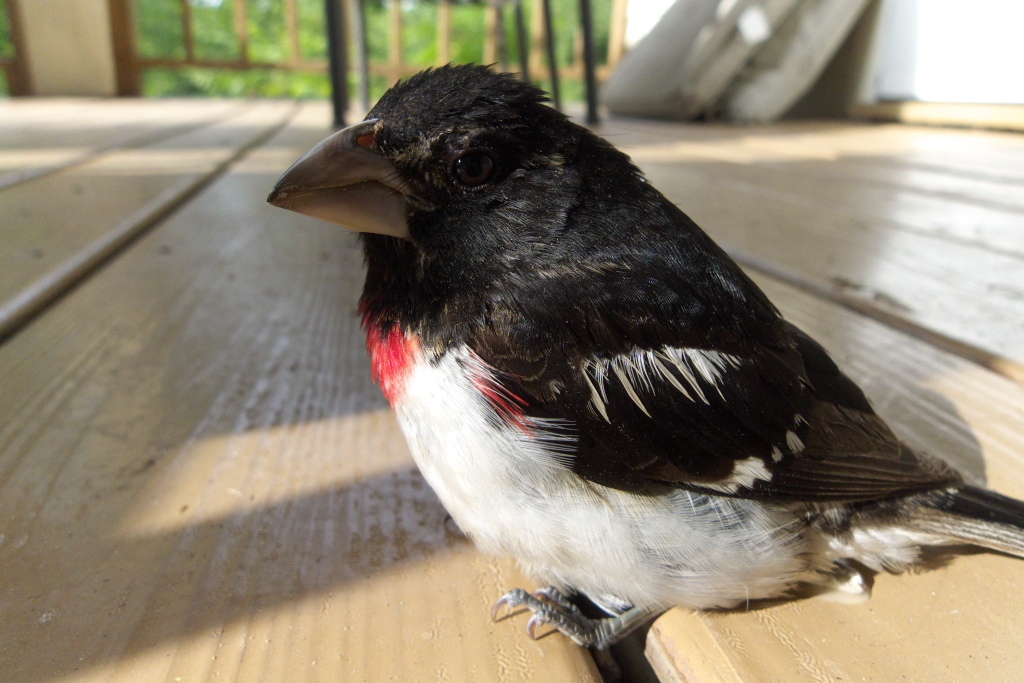
Maybe there’s someone out there who can explain this. As I mentioned a few days ago, we spent the weekend in Vermont. Yesterday morning, I went out onto the deck of the house where we were staying and there was this little bird, sitting on the deck, who didn’t move a muscle when I approached. It looked like it was in a bit of a daze. This picture was taken from approximately 3 inches away from it.

We were afraid that a funeral was in store. The bird sat there for half an hour; then suddenly gave itself a shake and flew away. We later saw a bird of his/her description eating from the bird feeder, looking perfectly chipper. One of our friends speculated that he may have stunned himself by slamming against the window or house.

Anyway, I was ever so glad it was not a terminal case, since I could see I would be designated to dispose of the corpse.


Numerical illiteracy

We get the Boston Globe daily, so I was generally aware that there is a movement afoot to relieve us geezers of our driver’s licenses as we get older. Yesterday, an article in the Day, at least on the surface, seemed to imply that there was little evidence that the elderly driver was a threat.

The headline read: “Elderly drivers in fewer accidents than others“. The sub-headine, if that’s what it called, pointed out that “Statistics don’t change push to change law”. The clear implication was that elderly drivers are statistically less likely to get into accidents than others.

But as has been said, there are three kinds of liars, the last of which is “statistics”. The first 17 paragraphs of the story make a compelling case, if you are numerically illiterate, that the elderly driver is not more likely to get into an accident than others. According to statistics, elderly drivers account for a smaller percentage of accidents than drivers in other age groups because while licensed geezers over 75 were 7 percent of those holding a license, they were only 3.6 percent of those involved in crashes.

These and other meaningless statistics lead some clueless experts, such as Russ Rader of the Insurance Institute for Highway Safety, to say that “there isn’t much evidence that elderly drivers are a big menace to other people on the road.”

Well, I’m not yet in the older than 75 category, but my mother is. She owns a car that is over 20 years old, which she bought new. It has less than 40,000 miles on it. These days, she might average 10 miles a week. I drive at least 10 to 20 times as much as she does. If she is one licensed driver, than I should count as 10 to 20 drivers in any reasonable comparison. Lots of elderly people have licenses but don’t drive at all. They should count as zero licensed drivers. It seems fairly obvious that simply looking at the percentage figures for various age groups tells you almost nothing.

Sure enought, in the 21st paragraph, long after most readers have moved elsewhere, we get to the nitty gritty:

[O]n the basis of miles driven, which the state does not track, the GAO found that drivers age 75 or older are more likely than all other drivers to be involved in fatal crashes The GAO report did not track nonfatal crashes.

So, the long and the short of it is that if you look at the only statistics that matter, the statistics disprove the headline. Geezers may be in numerically fewer accidents than others, but if they drive, they are more likely to get in an accident.

I’m not suggesting any particular course of action regarding elderly drivers. It’s a complicated issue, particularly in our car-centric society. I am merely pointing out that we can’t debate these issues in any reasonable fashion if we don’t understand basic math. I don’t know if this inability to understand basic mathematical or logical propositions is a peculiarly American phenomenon, but it is certainly not amelioriated by newspaper articles that misread statistics to prove a point that is simply not proven by the numbers on which they rely.
Art on Groton Bank-hiatus for me

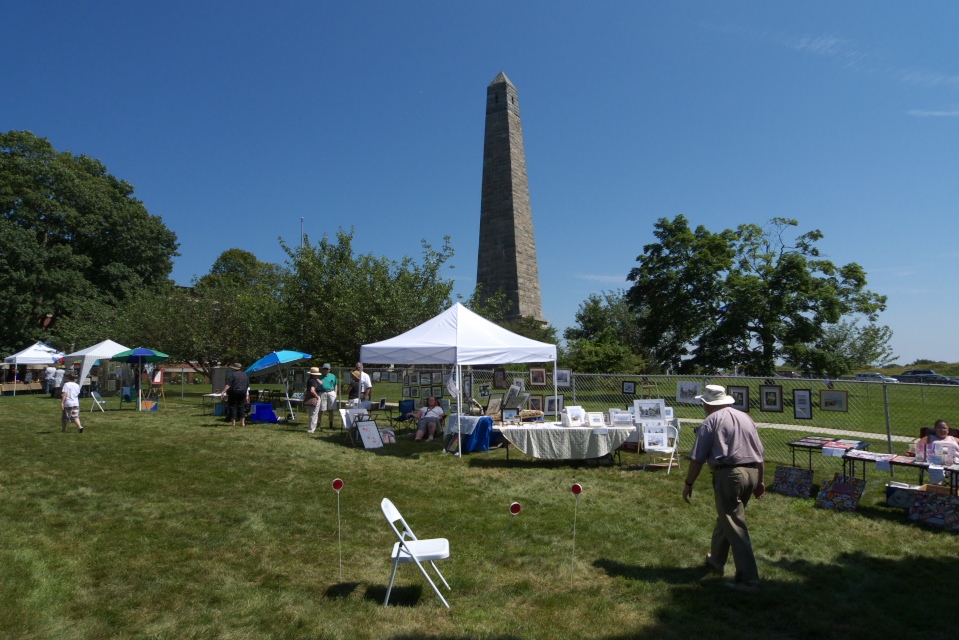
A few pictures from the Art on Groton Bank Exhibit today. An overview, with our historic Monument in the background.

Cows.

A collaborative effort, made on the spot. Is this a case of too many cooks?

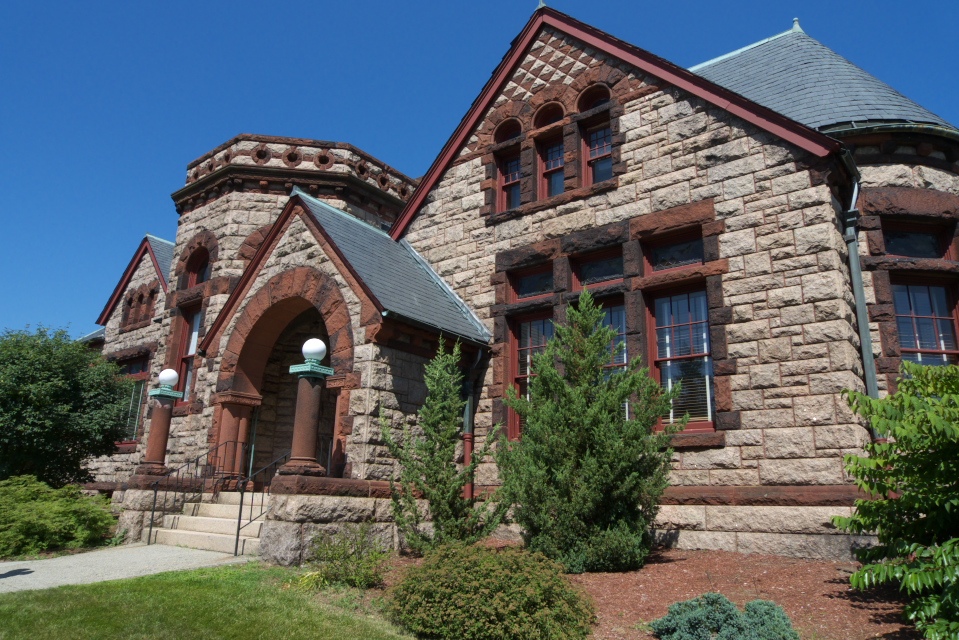
Though not strictly part of the show, there is a piece of art in that vicinity that we take for granted. The BIll Library is an architectural gem.

We didn’t buy a painting this year, but I got a great deal on a piece of pottery.

Tomorrow morning my wife and I take off for a mini-vacation in Vermont. We’ll be back Tuesday. My guess is that we’ll have no internet in the meantime, so this site is probably closing for a few days.


Merrick Alpert doubles his contributions

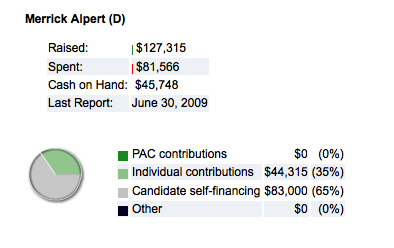
In for a dime, in for a dollar. Merrick Alpert donated almost twice as much to his campaign as all his other contributors put together.

At least Merrick is putting his money where his mouth is.

It’s sometimes forgotten that Merrick isn’t the only Democrat seeking to primary Dodd. According to Opensecrets.org, Roger Pearson has more money on hand than Merrick, but it’s obvious that they don’t have the latest information on Pearson’s finances.


Health Care

For reasons I can’t fathom, one of my reader’s comments are being blocked. I certainly didn’t do it, and I can’t figure out how to stop it. He emailed the comment to me after it was blocked, so I’m reproducing it below. If anyone else has had this problem I would appreciate it if they could email direct to me. If I have to disable the spam blocker, I’ll do that.

Here’s the comment, which is on the health care debate.

One element of the debate is, rarely, if ever, mentioned in specific terms is our current inventory of skills and hospitals. Do we have a sufficient supply of Doctors and if more are needed, where would they come from and where would they go? As a model, I think the local Pequot clinic is ideal in conjunction with larger hospitals. Is this model suitable for other parts of the country? If we could suggest some details, the debate would have more meaning.


Friday Night Music-Double Header

My younger son is visiting this weekend, and I asked him to recommend some music for tonight. These videos don’t quite qualify under my usual guidelines, as neither are live performances, but rules are for breaking, or at least bending.

Rather than choose between his suggestions, I’m posting both.

Yo La Tengo:

And Pearl Jam


Joe Courtney on the “Ed Show”


The argument in a nutshell

Stephen Colbert and/or his staff of writers is brilliant. Here he precisely summarizes the anti-Sotomayor argument from the right.


Lost Rivers

Today’s Times reports that there’s a world wide movement to liberate the rivers that flow through many of the world’s cities. Over the course of the last century many were covered with concrete.

When I was a kid there were sections of the Park (or Hog, depending on your taste) River that were still running free in Hartford. By the time I graduated from High School, the river was gone. Mark Twain built his house to evoke a riverboat, with one section resembling the pilot house facing the river, which flowed by his home. The house survives, but the river is gone, except in memories.

There was a brook that flowed near our house on Bulkely Avenue in Hartford, which is also now completely covered. It’s hard to understand the mindset that led to the burying of all those rivers. No doubt it’s part of our compulsion to try to control by brute force.

Wouldn’t it be nice if Hartford recaptured its rivers and streams, or at least some of them. When we made the city more livable for the automobile, we made it less livable for people. In Hartford, the burial of the rivers was only a small part of the overall plan to drive people out of the city. The river that used to split the city was covered with concrete, and at the same time the city was split anew, with dire results, by the interstates that cut the city off from the Connecticut River and split the city in two from the east to the west. If there had been a conscious plot to destroy the city, it wouldn’t have had to change the Hartford Redevelopment plan a bit.